How to Make Your Home Feel More Finished

Practical designer touches that take a room from “almost there” to beautifully pulled together
Have you ever looked around your home and thought, I like my furniture, so why does the room still feel unfinished?
Usually, the problem isn’t that you need to start over. In fact, you may already have most of what you need. What’s often missing are the layers that connect everything—the right rug, better lighting, pillows with color and texture, artwork, greenery, and a few thoughtfully chosen accessories.
These finishing touches are what give a home warmth, personality, and that comfortable, collected feeling we all notice in a beautifully designed room.
Here’s where I recommend starting.
1. Start With the Rug
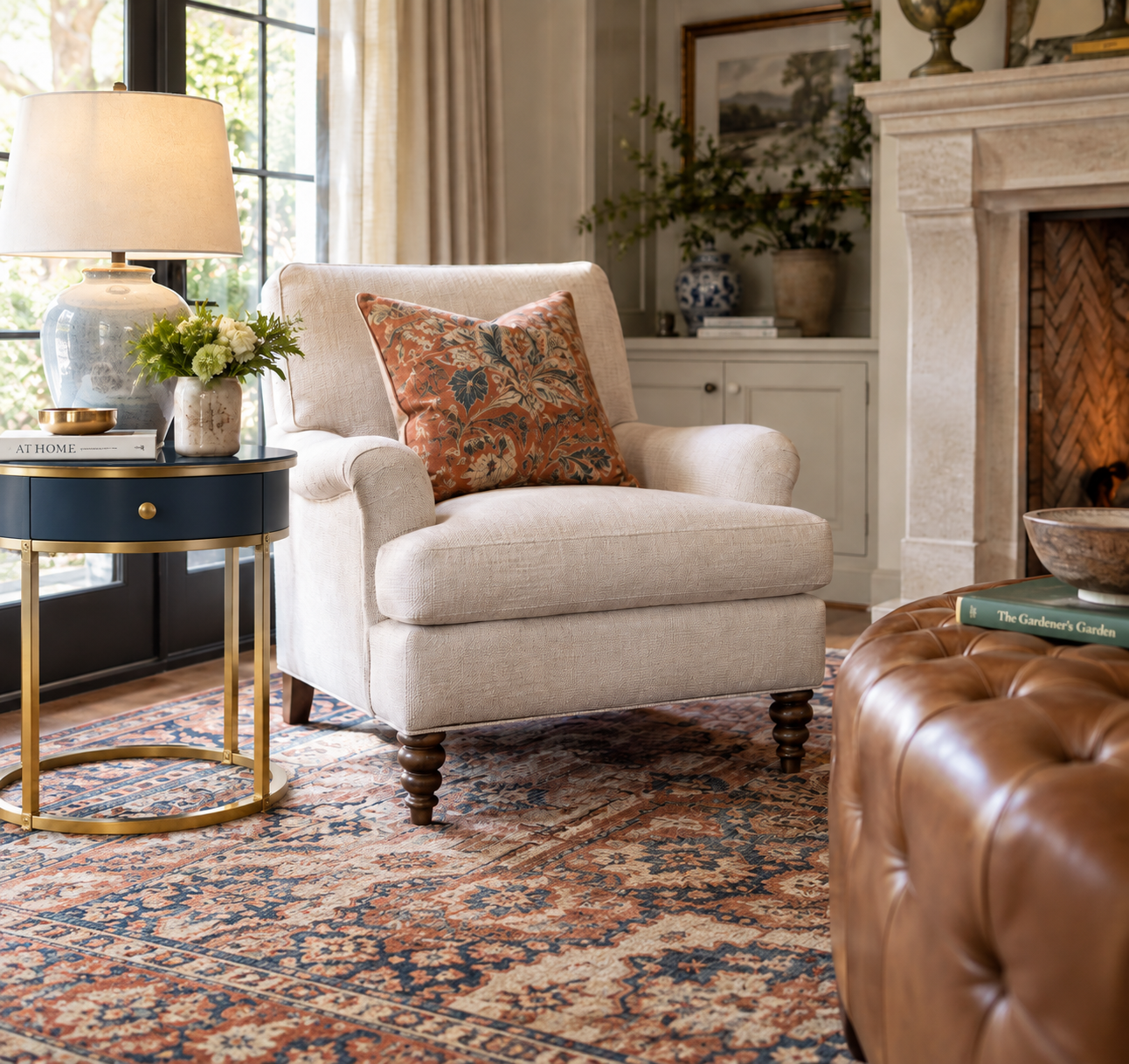
A rug is one of the quickest ways to make a room feel more complete because it visually connects the furniture.
If the rug is too small, even beautiful furniture can feel as though it’s floating around the room. The right-sized rug creates a foundation and gives the space definition.
In a living room
Whenever possible, choose a rug large enough for at least the front legs of the sofa and chairs to rest on it. In larger rooms, placing all of the furniture on the rug can create an even more cohesive look.
Think beyond neutral, too. A rug can be a wonderful place to introduce:
- Blue, green, rust, burgundy, or another accent color
- A subtle traditional pattern
- A more contemporary geometric design
- Texture for a quieter, monochromatic room
- A vintage-inspired pattern that makes the room feel collected
Designer tip: Choose your rug earlier in the process rather than treating it as an afterthought. Its colors and pattern can help guide the pillows, artwork, fabrics, and accessories throughout the room.
2. Use Lighting to Create Atmosphere
A room with only one overhead light rarely feels finished.
Great lighting comes from having light at several different heights. You want the room to feel warm and inviting in the evening—not like someone flipped on one bright light in the middle of the ceiling.
Layer your lighting
Consider using a combination of:
- Chandeliers or decorative ceiling fixtures
- Table lamps
- Floor lamps
- Sconces
- Picture lights
- Accent lighting inside cabinetry or bookshelves
Lamps are especially valuable because they add both function and another decorative layer.
A beautiful lamp can introduce ceramic, brass, glass, color, or texture into a room while also creating softer light.
Pay attention to scale
A small lamp on a substantial end table can look lost. Likewise, an oversized lamp on a delicate table can overpower it.
The lamp should feel proportionate to both the furniture and the room.
3. Let Pillows Do More Than Match the Sofa
Pillows are one of my favorite ways to refresh a room because they can completely change the look without replacing the furniture.
If you have a neutral sofa, don’t feel like every pillow needs to be beige or cream. This is a great opportunity to introduce personality.
Mix, rather than match
Try combining:
- One larger pattern
- A stripe or plaid
- A smaller print
- A solid textured fabric
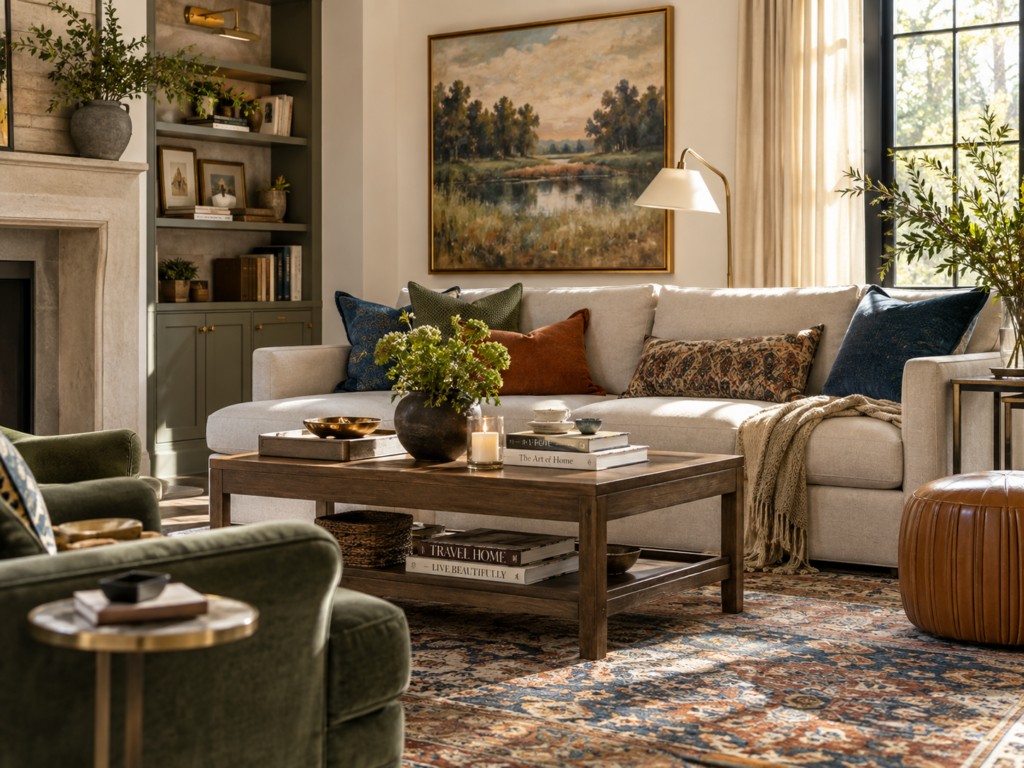
You might pair a navy floral with a soft green velvet, a plaid, and a neutral textured pillow.
The fabrics don’t need to match exactly. They simply need something that connects them—a shared color, similar tone, or complementary pattern.
Vary the shapes and sizes
A sofa filled with identical square pillows can feel more staged than designed.
Mixing larger squares with a lumbar pillow or two creates a more relaxed, layered appearance.
4. Add Artwork With Enough Presence
One small picture floating over a large sofa is one of the easiest ways to make a room feel unfinished.
Artwork needs enough visual weight to relate to the furniture underneath it.
Over a sofa, console, or fireplace
Consider:
- One substantial piece of art
- A coordinated pair
- A carefully planned gallery arrangement
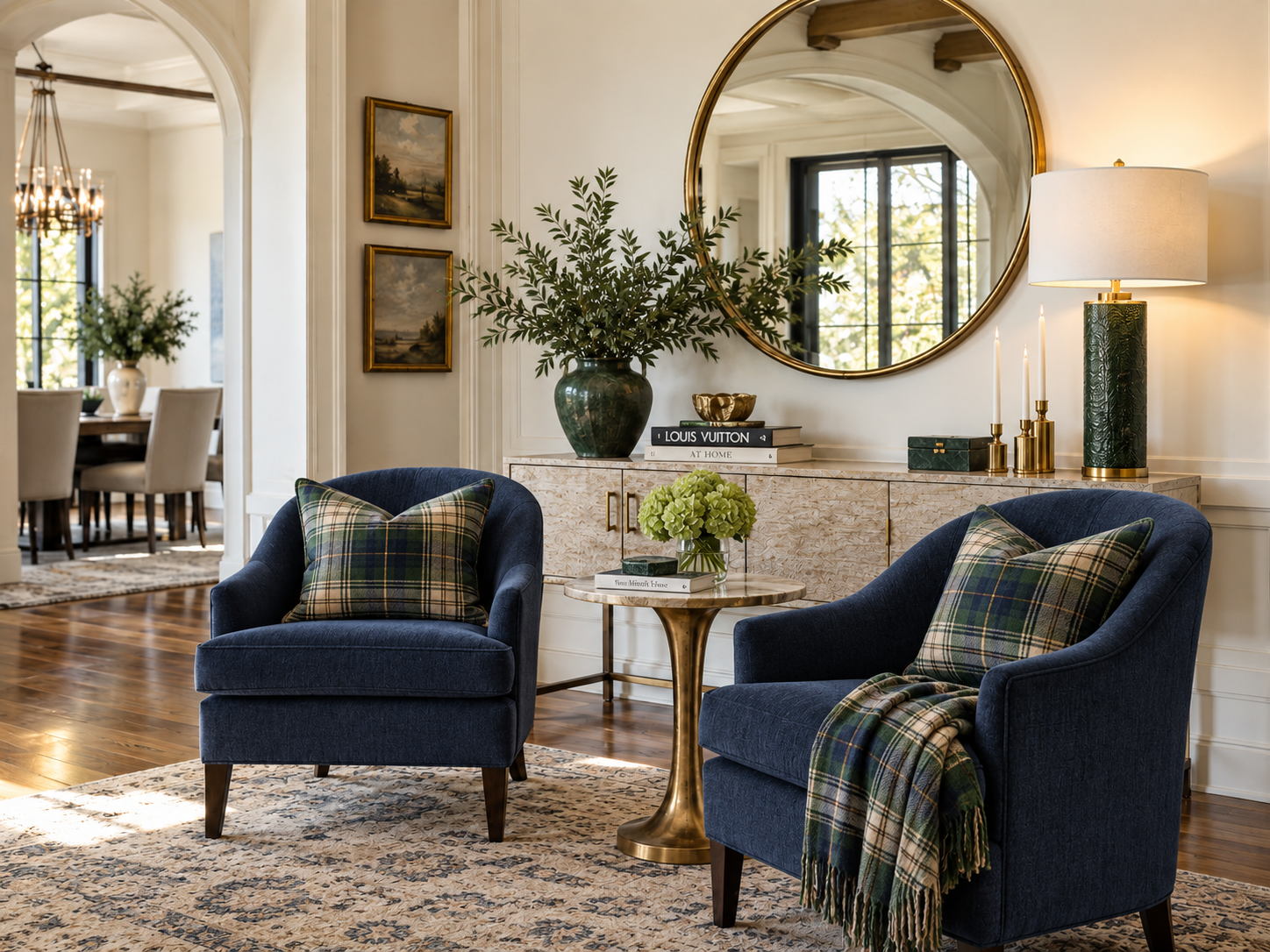
- A large mirror
- Artwork paired with decorative lighting
Don’t choose art simply because it matches the sofa. Choose something you enjoy looking at.
The artwork can repeat colors already in the room, but it should also bring some personality of its own.
Designer tip: When artwork feels slightly too small, adding a larger frame or mat can sometimes give it the presence the wall needs.
5. Bring in Greenery
Greenery adds life to a room in a way that furniture simply can’t.
A branch arrangement on a console, a small plant on a side table, or a larger tree in an empty corner introduces shape, softness, and natural color.
You don’t need greenery everywhere.
A few well-placed pieces are usually more effective than filling every surface with plants.
Think about scale again
Use larger greenery where the architecture calls for height, such as:
- An empty corner
- Beside a fireplace
- Near a large window
- Beside a console
Smaller arrangements work beautifully on coffee tables, nightstands, kitchen islands, and bookshelves.
Fresh is wonderful, but high-quality faux greenery can work beautifully too.
6. Style Your Coffee Table Without Overfilling It
A completely empty coffee table can make a room feel unfinished, but covering every inch of it creates the opposite problem.
The goal is balance.
I often like to start with a tray and build from there.
A simple coffee-table combination might include:
- Two or three beautiful books
- A small decorative bowl
- Greenery or flowers
- A candle
- One interesting decorative object
Vary the height slightly so everything isn’t sitting on one flat plane.
And leave some open space. Your coffee table still needs to function.
7. Don’t Forget the End Tables
End tables are small, but they have a surprisingly big impact on the finished look of a seating area.
A side table can provide another opportunity for color, metal, wood, stone, or an interesting shape.
Then style it simply.
A lamp, one small accessory, and perhaps a book or floral arrangement may be all you need.
You don’t have to decorate every inch of every table.
8. Layer in Texture
Rooms become much more interesting when everything doesn’t have the same visual finish.
Even a mostly neutral space can feel rich and inviting when it includes a variety of textures.
Consider mixing:
- Linen
- Velvet
- Bouclé
- Leather
- Woven materials
- Natural wood
- Stone
- Brass or other metals
- Grasscloth or textured wallpaper
Texture becomes especially important in rooms with a quieter color palette.
A cream sofa, beige walls, and neutral rug can still feel beautiful if the fabrics, finishes, and materials have enough variation.
9. Give Your Windows Some Attention
Window treatments often make a larger difference than homeowners expect.
Bare windows can leave an otherwise finished room feeling incomplete.
Drapery adds softness, height, and another opportunity for texture or color. Woven shades can introduce natural warmth, while tailored Roman shades create a cleaner look.
Hang drapery thoughtfully
When possible, hanging panels higher and slightly wider than the actual window can make the windows—and sometimes the entire room—feel more substantial.
The fabric should also relate to the rest of the room without competing with it.
10. Repeat Colors Throughout the Room
A room feels pulled together when colors appear more than once.
If you introduce green in an accent chair, for example, you might repeat a similar green in artwork, a pillow, greenery, or a rug.
The colors do not need to match perfectly.
In fact, slight variations often make a room feel more natural and collected.
Try creating a simple color story with:
- One primary neutral
- One or two accent colors
- A darker grounding color
- A natural wood tone
- One metal finish, with another used sparingly if desired
This gives you direction without making the room feel overly coordinated.
11. Add Something Personal
Beautiful design isn’t just about choosing attractive things.
Your home should tell visitors something about you.
Incorporate meaningful pieces such as:
- Family photographs
- Books you actually enjoy
- Travel finds
- Heirlooms
- Artwork you love
- Collections
- Pieces with a story
These elements keep a home from feeling like a showroom.
I often find that the most memorable rooms combine beautiful new furnishings with personal pieces that couldn’t have been purchased all at once.
12. Know When to Stop
Finishing a room does not mean filling every wall, table, shelf, and corner.
Negative space is part of good design.
Give beautiful pieces room to breathe. If every surface has something on it, your eye doesn’t know where to rest.
One large accessory can sometimes have more impact than five small ones.
Once you’ve styled the room, remove one or two things and look at it again. You may find that less feels much better.
A Quick “Does My Room Feel Finished?” Checklist
Before buying more furniture, look around your room and ask:
- Is the rug large enough to connect the furniture?
- Do I have lighting at more than one height?
- Have I introduced color or pattern through pillows and textiles?
- Is the artwork properly scaled for the wall?
- Do the windows feel finished?
- Does the room have greenery or another natural element?
- Have I mixed several textures and materials?
- Are key colors repeated around the room?
- Are the tables styled without looking cluttered?
- Is there something personal in the room?
- Have I left enough open space?
You may discover that the room doesn’t need more furniture at all. It simply needs the right finishing layers.
You Don’t Have to Redesign Everything
Sometimes homeowners come to me thinking they need an entirely new room when what they really need is help bringing together what they already own.
A different rug, a pair of lamps, updated pillows, artwork, or a few better-scaled accessories can make an enormous difference.
Good design isn’t always about buying more. It’s about knowing what the room needs—and what it doesn’t.
Ready to Make Your Home Feel More Finished?
If your rooms feel almost right but you’re not sure what’s missing, I can help you see the possibilities.
From furniture and space planning to rugs, lighting, fabrics, artwork, accessories, and the final layers that pull everything together, I provide experienced design guidance tailored to your home and the way you live.
Let’s create a home that feels beautiful, comfortable, and finished—without losing what makes it yours.
Dawn Williams
Interior Designer | Furnitureland South
336-629-3636 cell/text
dawnwilliams@furniturelandsouth.com